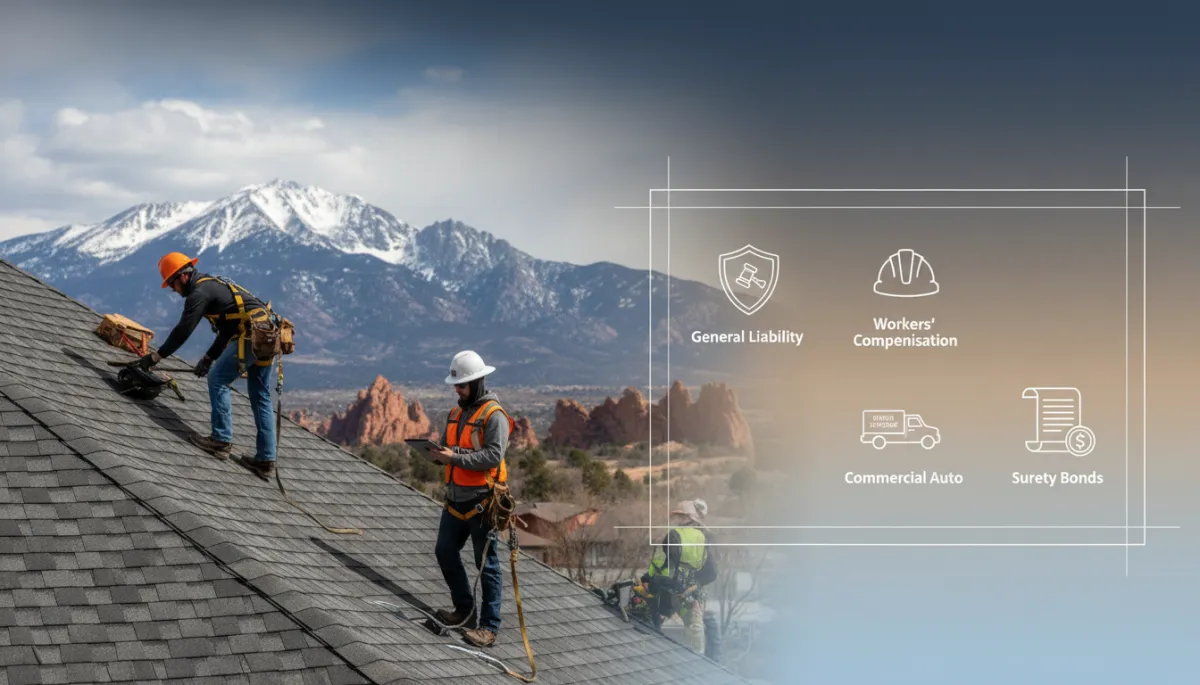
Essential Roofing Contractor Insurance in Colorado
Insurance, Roofing Contractors, Colorado Springs
Roofing Contractor Insurance in Colorado Springs: What Coverage Do You Actually Need?
If you run a roofing business in Colorado Springs, you work in one of the most demanding construction trades in one of the most weather‑exposed regions of the country. The right roofing contractor insurance program is not just a box to check for permits—it's what keeps a bad day from becoming a business‑ending event. This guide breaks down the core coverages Colorado Springs roofers actually need, how Colorado laws and local conditions affect your requirements, and how to approach coverage like a savvy business owner, not just a policyholder.
Why Roofing Contractor Insurance Matters More in Colorado Springs
Colorado’s Front Range is notorious for hail, wind, and fast‑changing weather. Colorado Springs sees regular severe storms that can turn a routine tear‑off into a high‑risk job in minutes. Add steep pitches, multi‑story homes, and tight neighborhoods, and your exposure to property damage and injuries is significant on every project.
At the same time, Colorado does not have a statewide roofing license. Instead, cities and counties—including Colorado Springs and surrounding El Paso County—set their own rules for permits and insurance. Many jurisdictions around the Pikes Peak region commonly expect at least $1 million per occurrence / $2 million aggregate in general liability for roofers, and proof of workers’ compensation before issuing or renewing licenses and permits, especially for higher‑value or public projects.
General Liability: The Foundation of Roofer Protection
When people talk about roofing contractor insurance Colorado Springs, they’re usually starting with general liability. This is the policy that responds when your operations cause property damage or bodily injury to others. For example:
- A bundle of shingles slides off the roof and damages a homeowner’s car or neighboring property.
- A client or inspector slips on debris in the driveway and suffers an injury.
- Water intrusion from an improperly flashed area leads to interior damage and mold claims.
A solid general liability for roofers policy helps pay for legal defense, settlements, or judgments if you’re found liable. Many Colorado municipalities and commercial clients now require you to show an active certificate of insurance with minimum limits—often $1M / $2M—before you can start work or get paid. Larger institutional or state projects can require higher limits or umbrella coverage on top of your base policy.
How Much General Liability Do Colorado Springs Roofers Need?
Premiums for roofer general liability in Colorado often fall in the $150–$200 per month range for small owner‑operators, with higher costs for larger crews and more complex projects. Given the claim severity potential—especially on multi‑story homes or commercial roofs—it’s wise to treat $1M / $2M as a starting point, not a ceiling. An umbrella policy can be an efficient way to add extra protection if you work on apartments, HOA complexes, or public buildings.

Clear certificates of insurance help roofers secure permits, projects, and prompt payment.
Workers’ Compensation: Protecting Your Crew and Your Business
Under Colorado law, workers’ compensation is required for nearly every employer with employees, including roofing contractors. Roofing is classified as high‑risk work, and “field employees” count as employees even if you call them helpers or independent contractors. That’s why workers comp roofing contractors Colorado policies are heavily scrutinized by regulators, local building departments, and trade associations such as the Colorado Roofing Association, which requires proof of coverage for membership.
What Workers’ Comp Covers for Roofers
- Medical costs for work‑related injuries or illnesses—crucial in a trade with frequent falls and tool‑related injuries.
- Lost wages while an injured worker recovers, which helps protect your crew and your reputation as an employer.
- Liability protection for you as the employer—workers’ comp is typically the exclusive remedy, reducing the risk of employee lawsuits.
Costs vary widely because premiums are based on your payroll, job classification, and claims history. For roofing, it’s common to see rates in the range of $9–$15 per $100 of payroll. That can translate into several hundred dollars per month for a solo roofer and several thousand per month for a crewed operation—but going without is not an option under state law, and penalties for non‑compliance can be steep.
Commercial Auto: Covering the Trucks That Keep You Moving
Your pickups, box trucks, and dump trailers are essential to every job. A personal auto policy usually won’t cover vehicles used primarily for business, especially when they’re loaded with ladders, equipment, and materials. That’s where commercial auto coverage comes in as a core part of any roofer insurance Colorado program.
What Commercial Auto Should Include for Roofers
- Liability coverage if your driver causes an accident and injures someone or damages property on I‑25, Powers, or neighborhood streets.
- Physical damage coverage (comprehensive and collision) for your work trucks and vans themselves.
- Hired and non‑owned auto if employees occasionally use personal vehicles or rentals for job‑related tasks.
In Colorado, auto liability insurance is mandated by state law, but limits suitable for a roofing business are often much higher than personal minimums. Many contractors align their commercial auto liability limits with their general liability and umbrella policies to avoid gaps when a serious accident occurs.
Proper commercial auto coverage protects both your vehicles and your balance sheet.
Surety Bonds: Meeting Licensing and Contract Requirements
While not technically insurance, surety bonds are often handled by the same specialists who place your policies, and they’re a crucial part of compliance. A roofing contractor bond Colorado is a three‑party agreement between you (the principal), the municipality or client (the obligee), and the surety company. The bond guarantees that you will comply with local codes, complete the work as agreed, and pay required fees or penalties if you do not.
- Many cities and counties require a roofing or contractor license bond as a condition of issuing or renewing your license.
- Project‑specific performance or payment bonds may be required on public jobs or larger private projects.
Unlike insurance, if the surety pays out on your bond, they will seek reimbursement from you. That’s why underwriters look closely at your financials, experience, and claims history when issuing bonds. Keeping your insurance program strong and your jobs well‑documented can make it easier and more affordable to secure the bonds you need.
Colorado‑Specific Factors Roofers Can’t Ignore
Hail, Wind, and High‑Risk Weather
Colorado Springs sits in a hail‑prone corridor where severe storms generate huge volumes of roofing work—and claims. For contractors, that means:
- More time spent on steep, damaged, or partially tarped roofs in unpredictable conditions.
- Increased vehicle use, often with loaded trailers and trucks on slick or debris‑covered roads.
- Higher scrutiny from insurers, who may adjust premiums or underwriting guidelines based on regional loss experience.
A comprehensive roofing contractor insurance Colorado Springs strategy should anticipate these realities, not just react after a bad storm season. That often means reviewing limits annually, updating payroll estimates, and confirming that your tools, equipment, and in‑transit materials are properly covered.
Colorado Roofing Services Act and Contract Rules
For residential roofing jobs over $1,000, the Colorado Roofing Services Act requires a written contract with specific disclosures, including how insurance claim proceeds are handled and clear cancellation terms. It also prohibits waiving or rebating the homeowner’s insurance deductible—a practice that can draw regulatory attention and damage your reputation.
Having your insurance and bonding properly arranged supports compliance with these rules. Many informed homeowners now ask for your license or registration, proof of general liability and workers’ comp, and sometimes even ask to verify your coverage directly with your insurer. Being prepared with accurate, up‑to‑date documentation can set you apart from storm chasers and short‑term operators who flood the area after major hail events.
Putting It All Together: Building a Strong Insurance Program
For most established roofing contractors in Colorado Springs, a well‑rounded program will include at least:
- General liability with limits that satisfy local jurisdictions, GCs, and commercial clients—often $1M / $2M or more.
- Workers’ compensation for all employees and field workers, accurately classified under roofing codes.
- Commercial auto for every vehicle titled to the business or regularly used for work, with liability limits aligned to your overall risk.
- Roofing contractor bonds to meet licensing, permit, or project‑specific requirements.
From there, many contractors add inland marine or tools and equipment coverage, an umbrella policy, or specialty coverages depending on their mix of residential, commercial, or public work. The key is to align your coverage with your real‑world exposures in Colorado Springs—not just a generic template for contractors in another state.
Ready to Review Your Coverage? Get a Local, No‑Pressure Quote
Your business, your crews, and your reputation are too important to trust to guesswork or one‑size‑fits‑all policies. Whether you’re an owner‑operator just starting out or you manage multiple crews across the Pikes Peak region, it’s worth taking an hour to confirm that your roofing contractor insurance Colorado Springs program is built for the real risks you face every day on the roof and on the road.
If you’d like an advisor to walk through your current policies, identify gaps, and suggest practical, budget‑conscious improvements, you can request a free, no‑obligation quote. Share your current limits, payroll, vehicle list, and typical project types, and you’ll receive recommendations tailored to roofing work in Colorado Springs—not just generic contractor coverage.
Take the next step to protect your company and your crew. Reach out today for a customized quote and make sure your insurance program is as strong and reliable as the roofs you build.
